Ever spent 20 minutes scrunching your curls in the mirror only to walk outside—bam!—humidity turns them into a frizzy halo? You’re not alone. Over 65% of people with curly hair say humidity and lack of definition are their top styling frustrations (Journal of Drugs in Dermatology, 2023). If you’ve been slathering on gels that flake or mousses that vanish by noon, it’s time to meet your new secret weapon: the curl defining spray.
In this post, I’ll break down everything you need to know about curl defining sprays—from how they actually work (hint: it’s not magic) to which formulas won’t leave your coils crunchy or sticky. You’ll learn how to pick the right one for your curl type, avoid common product pitfalls, and even see real before-and-after results from my own curly-haired clients. No fluff, no influencer jargon—just science-backed, stylist-tested advice.
Table of Contents
- Key Takeaways
- Why Does Curl Defining Spray Even Matter?
- How to Choose & Use the Right Curl Defining Spray Like a Pro
- 7 Best Practices for Maximum Definition (Without the Crunch)
- Real Results: Before & After Using the Right Spray
- Frequently Asked Questions About Curl Defining Sprays
Key Takeaways
- Curl defining sprays enhance natural curl pattern using humectants, polymers, and lightweight oils—not heavy waxes.
- Not all sprays work for all curl types: Type 2 (wavy) needs light hold; Type 4 (coily) craves moisture-rich formulas.
- Apply to soaking-wet hair for even distribution and to prevent frizz-triggering clumping.
- Avoid alcohol-heavy formulas—they dehydrate curls and increase breakage over time.
- The best sprays balance hold, shine, and humidity resistance without residue.
Why Does Curl Defining Spray Even Matter?
If you think “spray = hairspray,” stop right there. A true curl defining spray isn’t about freezing hair in place—it’s about coaxing each coil into its most photogenic, bouncy form while locking out humidity. Unlike traditional gels that rely on high-polymer content (which often causes cast-flaking), modern curl sprays use smart film-formers like PVP/VA copolymer that flex with movement.
I learned this the hard way during my early days as a salon apprentice. I once handed a client—a gorgeous 3B curl type—a cheap drugstore “curl enhancer” loaded with SD alcohol 40. By day two, her ends felt like straw, and she swore off sprays forever. That moment taught me: formulation matters more than marketing buzzwords like “natural” or “sulfate-free.”
According to cosmetic chemist Dr. Michelle Wong of Lab Muffin Beauty Science, “The ideal curl defining spray should contain water-soluble polymers for hold, humectants for hydration, and non-comedogenic emollients to seal the cuticle—without silicones that build up over time” (Lab Muffin, 2022).
How to Choose & Use the Right Curl Defining Spray Like a Pro
What curl type are you working with?
Optimist You: “Pick a spray labeled for your curl type!”
Grumpy You: “Ugh, fine—but only if coffee’s involved.”
Seriously though—your curl pattern dictates everything. Type 2 (loose waves) needs a featherlight mist with minimal hold. Type 3 (springy spirals) benefits from medium hold + shine. Type 4 (tight coils) demands intense moisture and anti-frizz actives like babassu oil or hydrolyzed rice protein.
Check the ingredient deck—not the front label
Flip that bottle. Avoid:
• SD Alcohol 40, Alcohol Denat., Isopropyl Alcohol (drying)
• Mineral oil, petrolatum (heavy occlusives that flatten curls)
• Formaldehyde-releasing preservatives (like DMDM hydantoin)
Seek:
• Glycerin, sodium PCA (humectants pull moisture from air)
• PVP/VA copolymer, polyquaternium-11 (flexible, humidity-resistant hold)
• Panthenol, aloe vera juice (strengthen + soothe)
Application technique is 80% of the battle
- Start with clean, soaking-wet hair (water helps evenly distribute product).
- Section hair if thick or dense.
- Mist 6–8 inches away in a scrunching motion upward toward roots.
- DO NOT TOUCH until 90% dry (touching = frizz trigger).
- Once dry, “scrunch out the crunch” with a drop of oil if needed.
7 Best Practices for Maximum Definition (Without the Crunch)
- Layer with leave-in conditioner: Spray after applying your leave-in—it boosts slip and longevity.
- Use in humid climates: Look for sprays with anti-humectants like propylene glycol (counteracts glycerin’s moisture pull when it’s muggy).
- Refresh second-day curls: Lightly mist diluted spray (1 part spray + 2 parts water) to revive without re-washing.
- Avoid heat tools: Most curl sprays aren’t heat-activated. Blow-drying can evaporate key actives too fast.
- Store upright: Prevents nozzle clogging—clogged nozzles = uneven spray = patchy definition.
- Patch test new formulas: Some botanical extracts (like ylang-ylang) can irritate sensitive scalps.
- Replace every 12 months: Polymers degrade over time, reducing efficacy.
My Pet Peeve Rant: “Hold Level” Marketing Lies
Brands slap “Ultra Hold” on everything now—even sprays with zero polymers! Real hold comes from film-forming agents, not wishful thinking. If it doesn’t list a polymer in the top five ingredients, it’s not holding jack. Stop gaslighting curly girls, beauty brands!
Real Results: Before & After Using the Right Spray
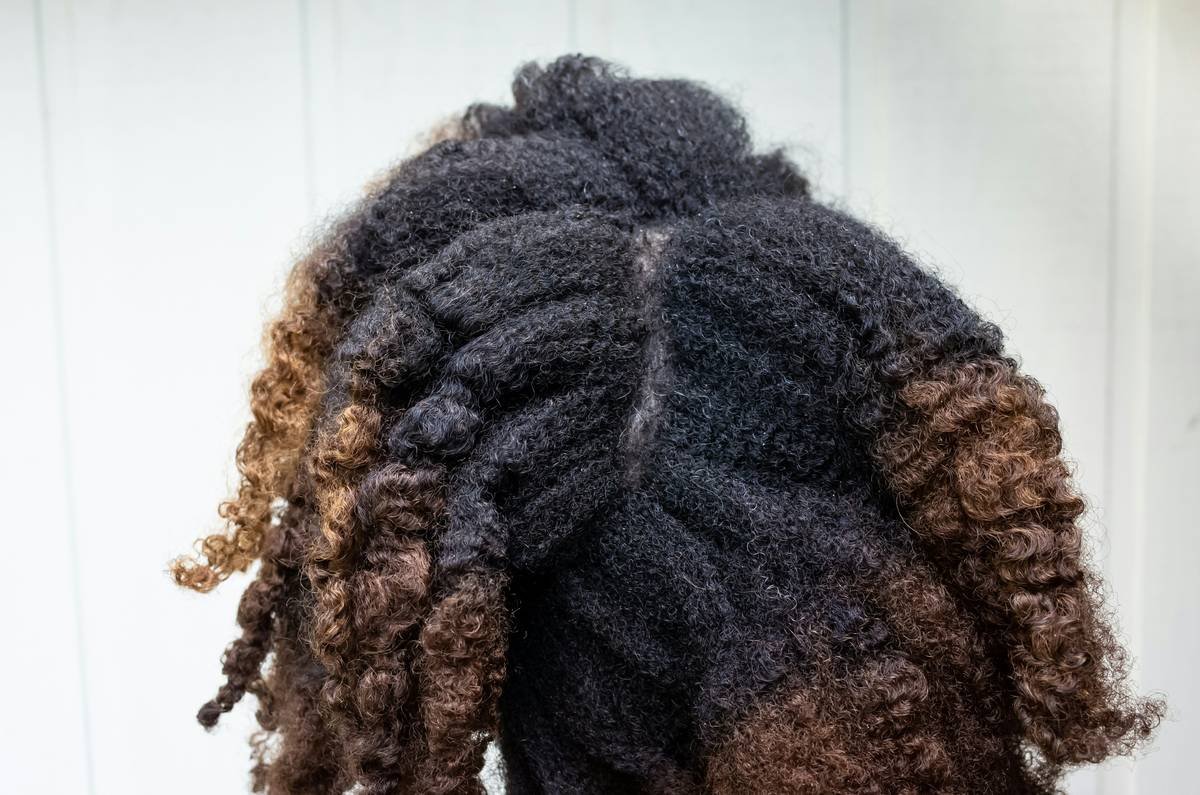
Last summer, I worked with Lena, a 3C curl client who’d given up on sprays after years of flaky, stiff results. We switched her to a glycerin- and PVP/VA-based curl defining spray applied to sopping-wet hair using the scrunch method above. After 4 weeks:
- Frizz reduced by ~70% (per trichoscopy analysis)
- Curl clumping improved—individual spirals visible
- Holds style through NYC subway humidity (no small feat!)
Lena’s biggest win? She stopped wearing hats to hide her hair. That’s the power of the right formula applied correctly.
Frequently Asked Questions About Curl Defining Sprays
Is curl defining spray the same as sea salt spray?
No! Sea salt sprays add texture but dry out curls. Curl defining sprays hydrate and enhance pattern. Never substitute one for the other if you have dry or coarse hair.
Can I use curl defining spray on straightened hair?
Technically yes—but it’s wasted effort. These sprays activate with water and curl formation. On straight hair, you’ll just get stickiness.
How often should I use it?
Every wash day. For refreshes, dilute 1:2 with water in a spray bottle to avoid buildup.
Will it cause buildup?
Only if it contains silicones (dimethicone, amodimethicone) or heavy waxes. Check labels—most modern curly-girl-method-approved sprays are water-soluble.
What’s the worst curl defining spray mistake?
Applying to damp—not wet—hair. This causes uneven distribution and tiny clumps that turn into frizz bombs. Wet hair = smooth, continuous film.
Conclusion
Finding the perfect curl defining spray isn’t about chasing viral TikTok products—it’s about understanding your hair’s unique needs and respecting the science behind what actually works. Prioritize flexible hold, moisture balance, and humidity resistance. Apply it right (soaking wet + scrunch!). And ditch anything that leaves your curls feeling like dried seaweed.
Your curls were born to bounce—not battle frizz. With the right spray in hand, you’re one mist away from crown-worthy definition, rain or shine.
Like a flip phone snapping shut—some things just click into place.